My Treasured "Trash": How my High School Video Editing Laptop has turned into my Proxmox Playground
The Origin: The Undying Piece of Trash
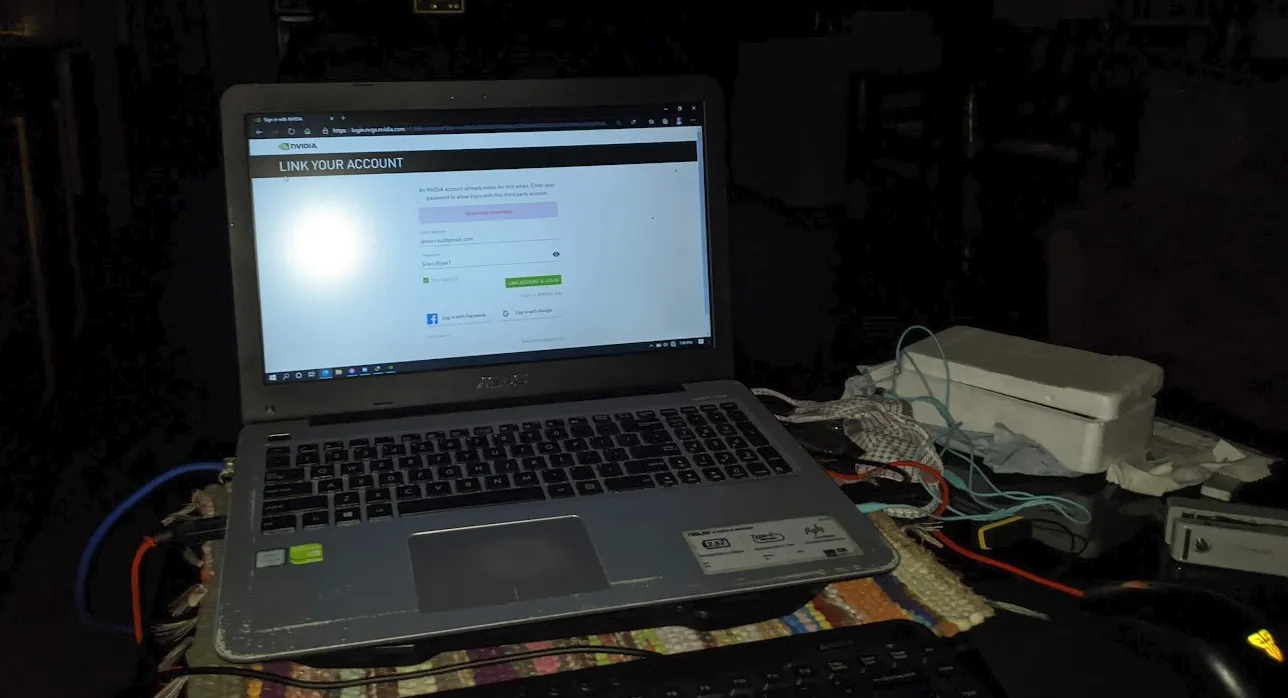
This project began with a laptop that had reached its absolute breaking point. This was the same machine that fueled my high school video editing years of school projects and competition wins, but the toll of that work was visible: the original hard drive had died, the speakers were blown, several keyboard keys were non-functional, and the screen had failed twice. Even the charger was failing, unable to draw enough current to keep the system stable under load.
In 2022, right before starting my Computer Science journey, I finally upgraded. I remembered thinking "I'm finally off this dogshit after so long!", of course, I was innocent about self-hosting back then. 3 years later during a visit home, I was rummaging around and managed to stumble upon this thing again. I looked at this machine—which arguably helped shape my view of the world—and saw something different. The old me would've called this thing "dogs*t hardware from 2016". But with my new knowledge, I saw an i5-6200U and 8GB of RAM that still had work to do. I brought this thing back to CDO, inspected the thing, confirmed that the hard drive was broken, and luckily, my brother have one lying around, and quickly replaced it.
The Pivot: Engineering a Home Lab
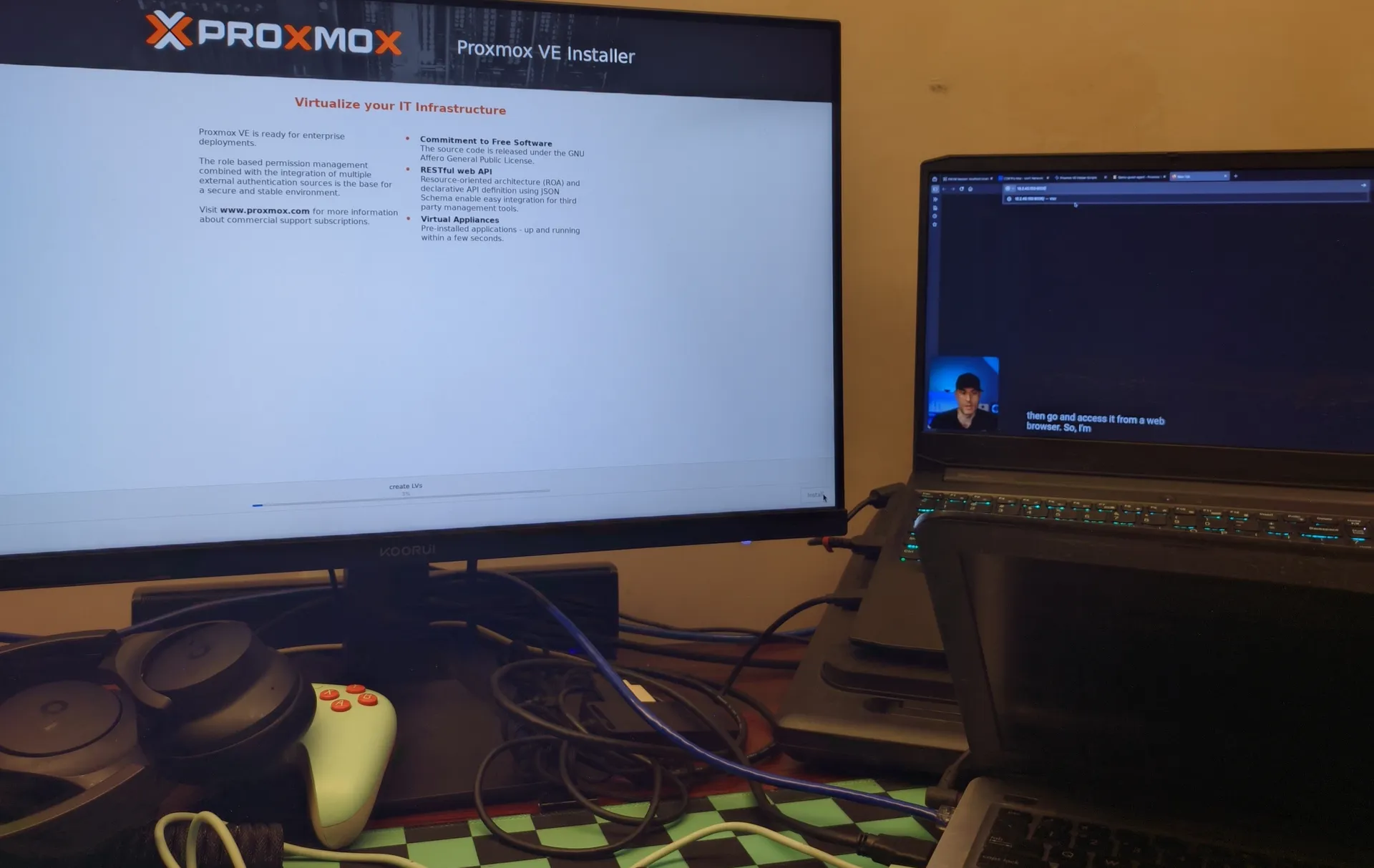
The inspiration for this project came from the growing self-hosting community on YouTube. I initially believed that a sophisticated setup required enterprise-grade hardware, but that perspective shifted when I saw engineers building functional Kubernetes clusters out of nothing more than Raspberry Pis. The efficiency of those nodes inspired me to give my battle-scarred laptop a second life. I wiped the legacy creative suites and replaced them with Proxmox VE, transforming "scrappy" hardware into a sophisticated virtualization environment.
The Technical Ecosystem: Resource Management & Orchestration
Working with a limited 8GB of single-channel DDR4 required precise surgical allocation within Proxmox to ensure stability:
- Network-Level Security (LXC): I isolated AdGuard Home into a lightweight container, strictly capped at 1 CPU core and 512MB of RAM to provide zero-latency DNS filtering for my entire local network.
- The Monolithic Portfolio (LXC/Docker): To host my full-stack Next.js portfolio, I allocated a larger footprint—2 cores and 4GB of RAM—to handle the resource-heavy process of compiling Docker containers on-device.
- Production-Grade CI/CD: The server acts as a self-hosted node for my GitHub Runners. Every time I push code to my portfolio or CMS, the pipeline automatically builds, tests, and deploys the new version directly onto this legacy hardware.
Insights & Real-World Monitoring
I engineered a custom tracking layer to gain actual insights into the infrastructure’s reach. By capturing approximate geolocation (city-level) and unique visitor counts, I can monitor the global traffic hitting my home-hosted node, turning the portfolio into a live data science experiment and a window into server performance under real-world use.
The Engineering Growth
Currently living under my standard handle KvassAndVodka, this machine represents my growth as an engineer. By working within the severe hardware constraints of a damaged 2016 laptop, I’ve learned the nuances of resource allocation, container orchestration, and network security. What was once a tool for creating content is now the backbone of my digital identity—a living proof-of-concept for my specialization in infrastructure and automation.